For sheet-metal components, thickness, surface requirements and formability should be assessed together. Cold-rolled steel is important in industrial manufacturing, but the product name alone does not establish suitability.
Specify the grade, condition, dimensions and forming demands together, rather than selecting only for a bright surface.
1. What is cold-rolled steel?
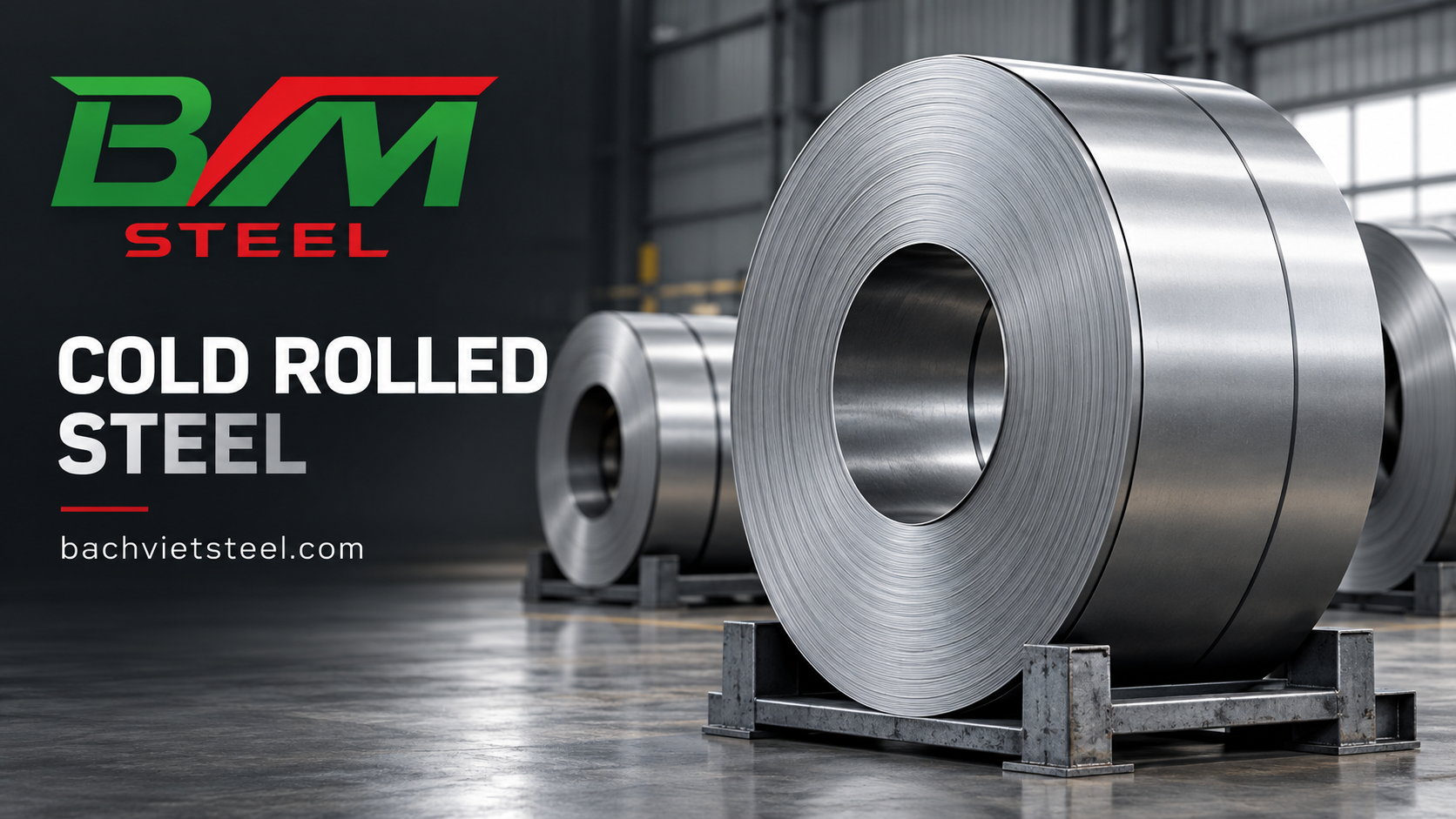
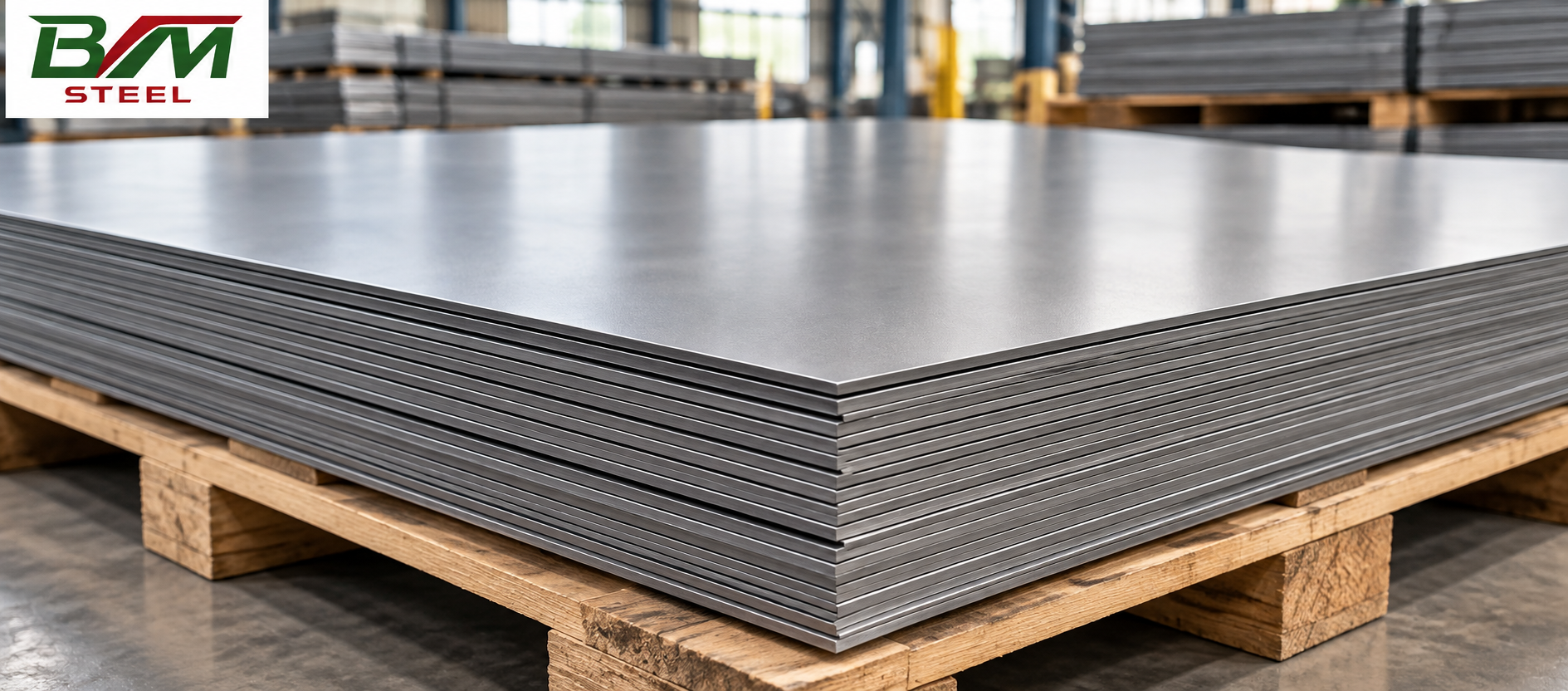
This guide concerns cold-rolled steel sheet, strip and coil for industrial use. The material is commonly produced from hot-rolled steel, with surface preparation and thickness reduction in the cold mill.
Depending on the product, annealing, temper rolling and finishing may follow. Delivery forms include coils, slit strip and cut sheets.
Distinguish these products from cold-drawn wire, drawn bars and coated steel: their processes, geometry and acceptance requirements differ.
2. Main selection considerations
- Thickness and tolerances: define acceptable limits for the drawing and downstream operations.
- Surface: clarify appearance, roughness, protective oiling and the component's exposed face.
- Flatness and shape: assess effects on feeding, cutting, forming and assembly.
- Formability: compare bending, drawing or deep-drawing demands with the correct grade and supply condition.
A bright surface does not establish deep-drawing capability, and nominal thickness does not replace tolerance requirements. Record these criteria separately in the specification.
3. Processing and the role of annealing
A common route can be outlined as:
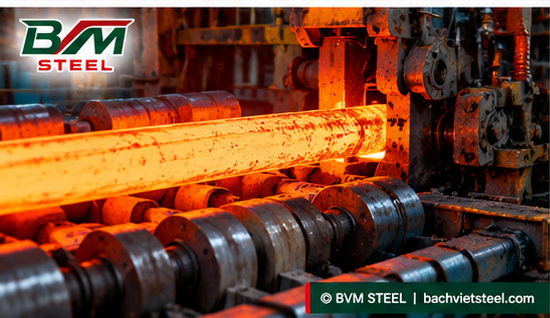
Hot-rolled steel → descaling → cold reduction → cleaning and annealing → temper rolling → finishing.
Cold reduction work-hardens the material. Annealing adjusts the structure and restores formability for the intended product. Temper rolling can contribute to shape, surface and service characteristics.
Annealed and full-hard material are not freely interchangeable
Full-hard coil has a different supply condition from annealed material intended for forming. Cold-rolled steel therefore should not be assumed to be “harder and better” for every application.
State whether the material will undergo further processing or go directly into bending and forming. This is important when comparing supply options.
4. Choosing between hot-rolled and cold-rolled products
| Decision | Hot-rolled steel | Cold-rolled steel |
|---|---|---|
| Manufacturing route | Product from hot rolling | Additional cold reduction and appropriate treatment |
| Surface requirements | Check as-rolled, descaled or treated condition | Define finish and exposed-face requirements |
| Dimensions | Confirm product standard and available range | Also specify tolerances, flatness and condition |
| Formability | Depends on grade and delivery condition | Depends on grade, work hardening and subsequent treatment |
| Selection basis | Component needs and processing route | Component needs and processing route |
This table supports specification discussions rather than grade substitution. Surface colour cannot reliably identify the material, and relative price should be checked for the actual order.
5. Grades and application direction
Common designations for cold-reduced carbon steel sheet and strip under JIS G 3141 include:
| Designation | General quality direction |
|---|---|
| SPCC | Commercial quality for appropriate simple forming |
| SPCD | Drawing quality |
| SPCE | Deep-drawing quality |
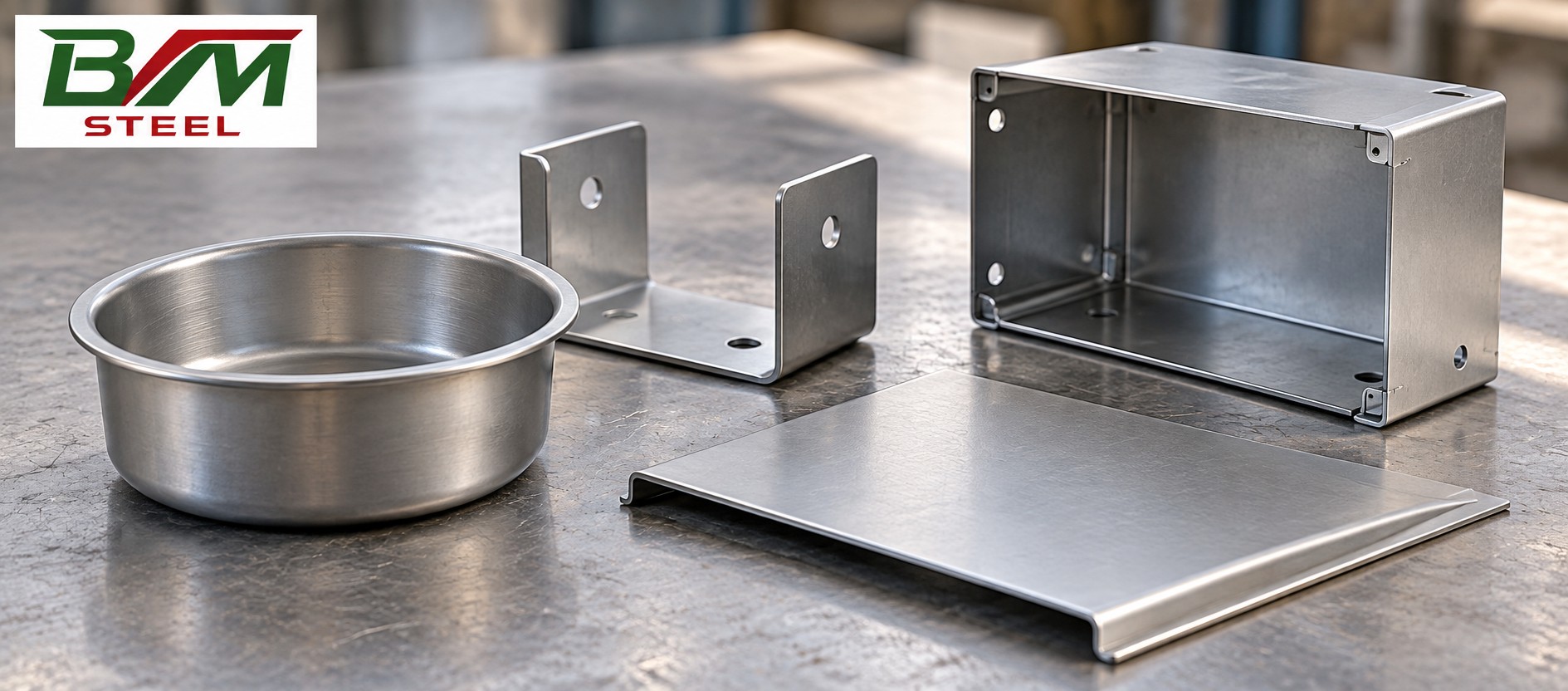
Applications include equipment housings, metal furniture, cabinets and formed parts. Automotive or specialist components should follow the customer's drawing and specification.
The table does not imply that every component in a category can use the same grade. Check the complete designation, condition, guaranteed properties and applicable standard edition before selecting or substituting material.
6. Receiving inspection for sheets and coils
- Verify identification: labels, grade, batch/coil numbers and MTC.
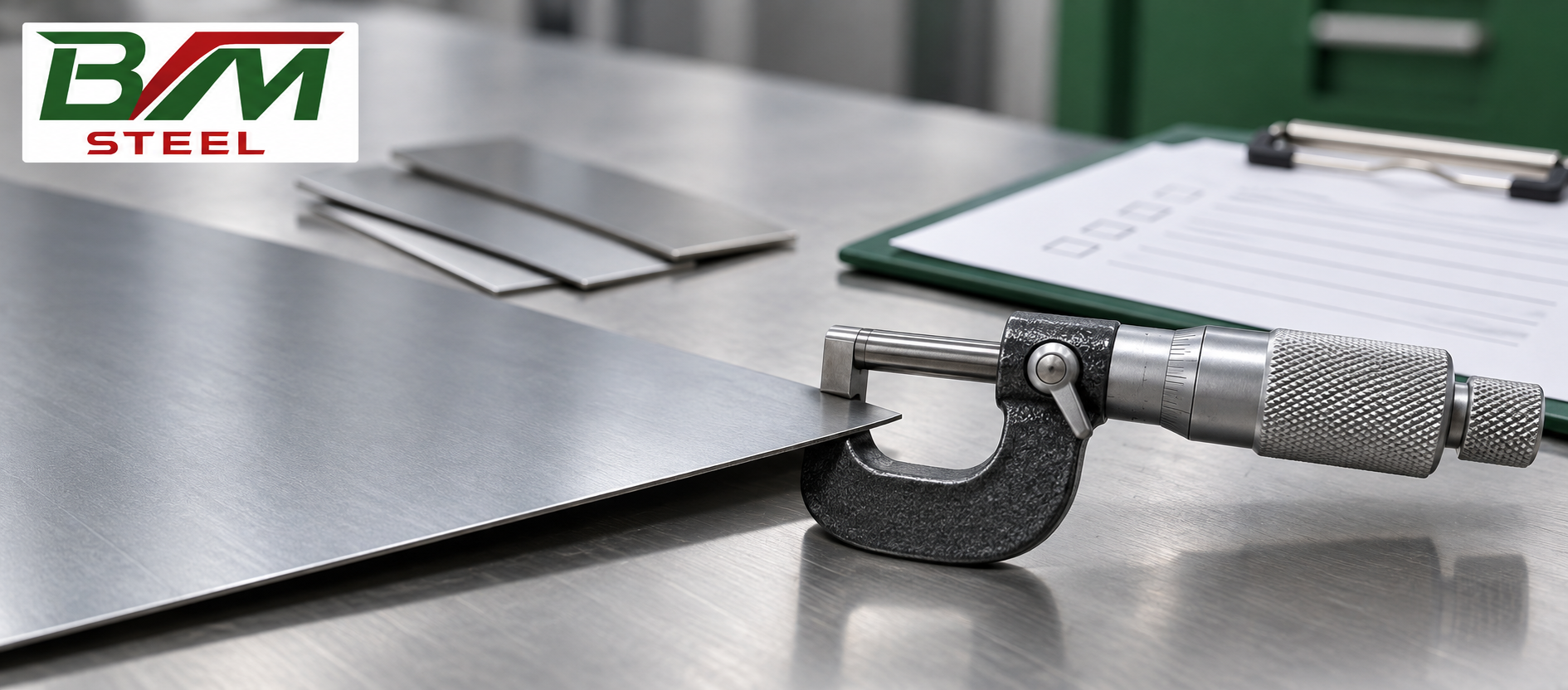
- Check dimensions: thickness, width, sheet length, tolerances and specified flatness.
- Check condition: annealed condition, hardness level or agreed delivery state.
- Check surfaces: rust, scratches, pressure marks, oiling and the designated quality face.
- Compare performance: properties and tests specified in the order.
For forming, bending or surface treatment, consider sample evaluation on the intended route. Visual inspection does not replace documentation and technical checks.
7. Surface protection and packaging
Uncoated cold-rolled carbon steel can rust. Protective oil helps limit corrosion under suitable conditions; it does not replace the finished product's required coating or paint system.
- Store in a dry, covered area and limit water exposure or condensation.
- Retain suitable packaging until use, and inspect signs of moisture or damage.
- Follow the appropriate cleaning process before painting, plating or operations requiring a clean surface.
- Preserve batch identification after slitting or cutting to support traceability.
Agree packaging, oiling and transport conditions as part of the order.
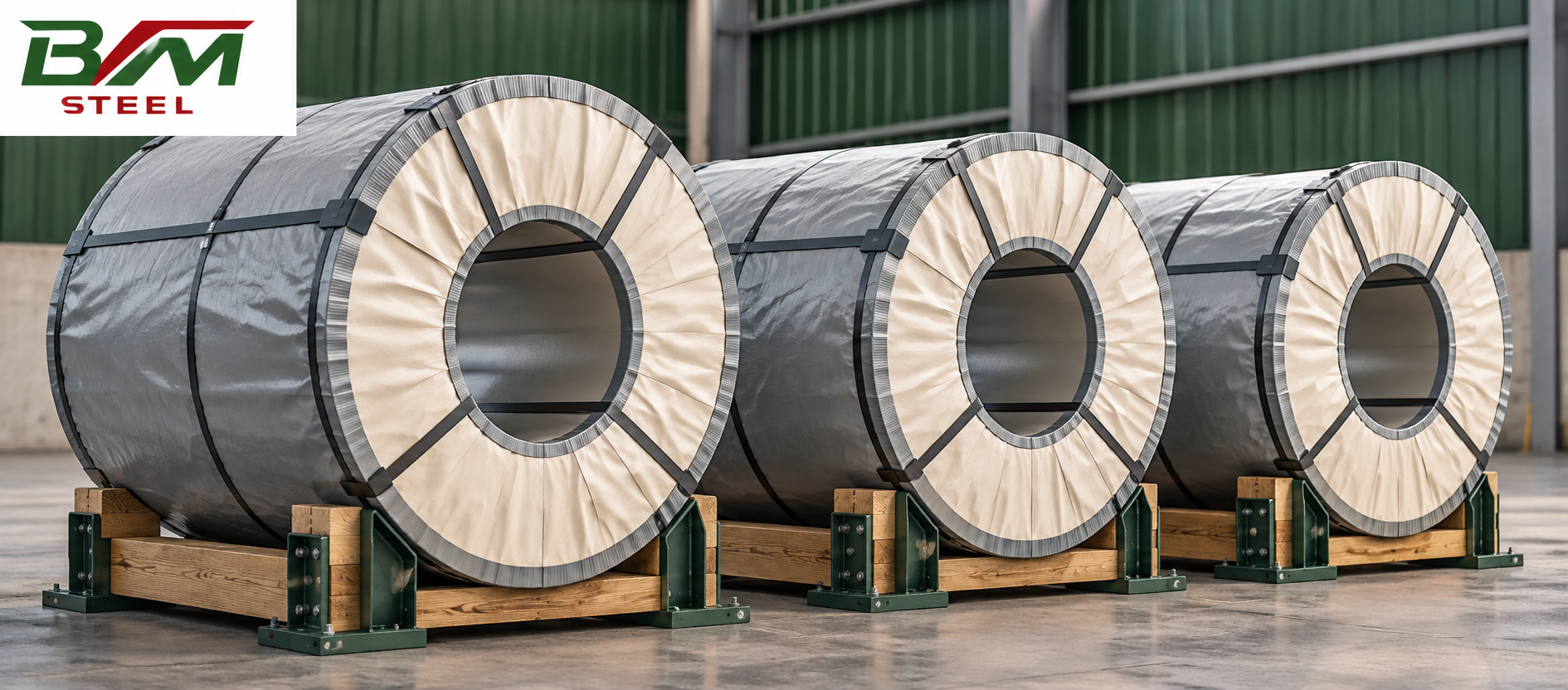
8. Prepare a purchase enquiry for BVM Steel
Provide the application, grade and standard, supply condition, thickness, width, sheet or coil dimensions, surface requirements, volume and delivery schedule.
For coils, add feeding-equipment requirements such as inside diameter, weight limit and slitting needs. A drawing or sample of the formed component helps clarify material discussions.
Contact BVM Steel · Read the steel-wire guide
References
This BVM guide uses verified material from Nippon Steel — Cold-Rolled Steel Sheets and Coils, JFE Steel — cold-rolled sheet introduction and its product catalogue.
AI illustrations prepared by BVM depict product forms, processing concepts, applications and inspection. They do not show a specific facility or measured test result.