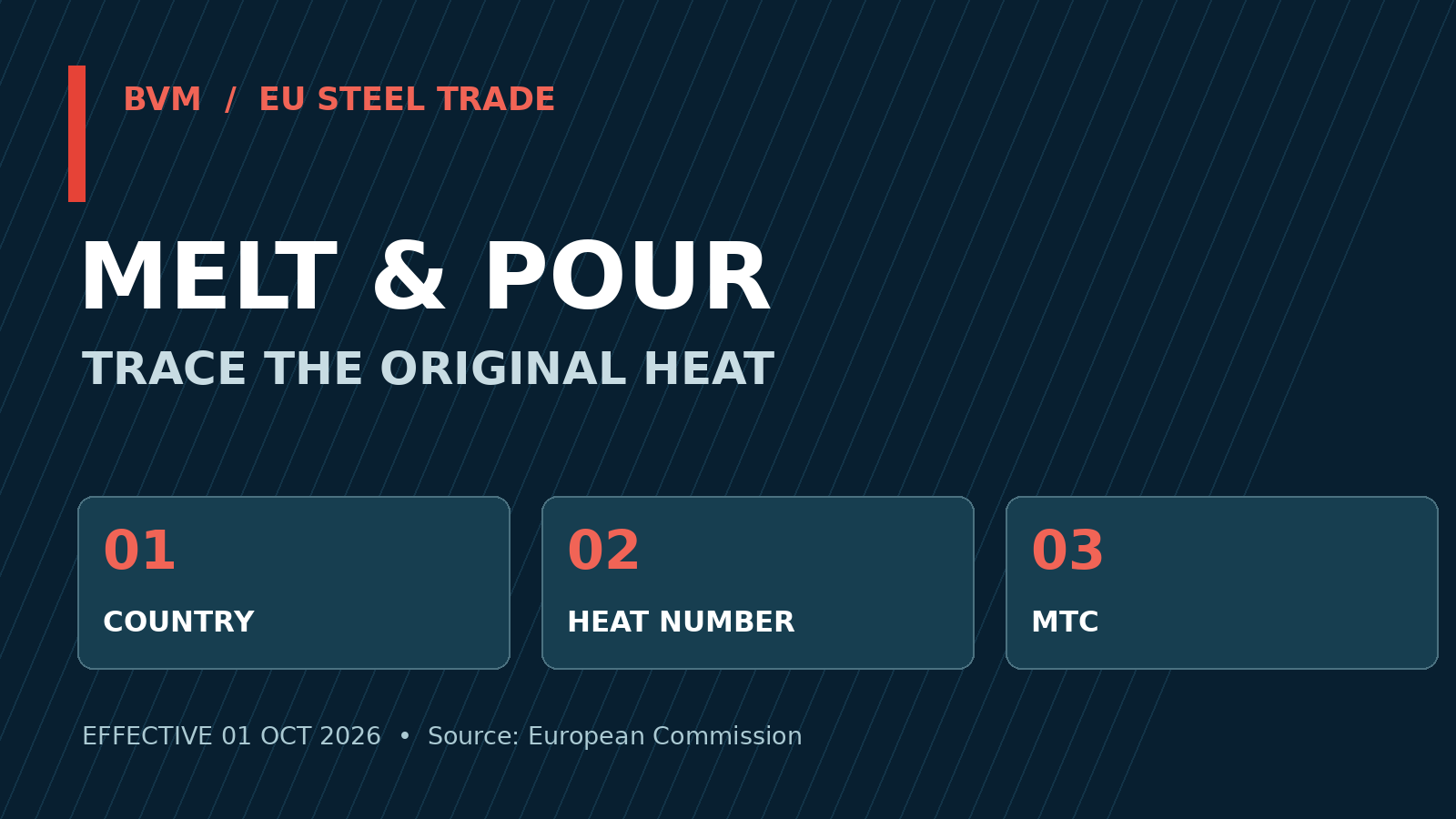
Since 1 October 2026, EU importers of steel products within Regulation (EU) 2026/1384 must declare the country where the steel was originally melted and poured. That location can differ from the place of subsequent processing or shipment.
BVM editorial adaptation, 11 October 2026. Based on the European Commission's 31 August notice, Implementing Regulation (EU) 2026/1963 and Steel Regulation (EU) 2026/1384. Check the product scope for each shipment.
Evidence for the declaration
The Commission identifies a Mill Test Certificate (MTC) stating both the melt-and-pour country and the heat number as the primary document. Where the MTC lacks either field or is unavailable, customs authorities may consider invoices, delivery notes, quality certificates, executed contracts or orders, supplier declarations and production or customs records as complementary or standalone evidence, provided they establish both facts. From 1 October 2027, these alternatives are accepted only as supplements to an MTC. Source: European Commission.
BVM view: confirm the product's CN scope with the EU importer; obtain the producer's melt-and-pour information; match the heat number across MTC and shipment papers; and agree who supplies the documents before dispatch. A commercial country-of-origin statement does not automatically establish the original melt-and-pour country. See the Commission's explanation and the implementing act.